

3 simple ways a fiber isolator protects your signal
Views: 0 Author: Site Editor Publish Time: 2025-09-30 Origin: Site


A fiber isolator helps your signal stay strong in many ways.
Fiber optics do not let electromagnetic interference hurt your signal. They stop signal loss and keep speeds fast over long distances.
You are safe from things like bending or breaking and bad weather. This keeps your signal clear.
Faraday Effect and polarizers make sure only light going forward gets through.
Key Takeaways
A fiber isolator stops light from bouncing back. This keeps your equipment safe and helps your signal stay strong.
Using a fiber isolator lowers noise and stops interference. This makes your signal cleaner and more steady.
Fiber isolators protect important parts like lasers. They help these parts last longer and need less fixing.
Blocks Reflections
Back Reflection Risks
Light can bounce back in a fiber optic cable. This can hurt your equipment. It can also make your signal weaker. If you do not use a fiber isolator, more light bounces back as the cable gets longer. The table below shows how return loss changes when the cable is longer:
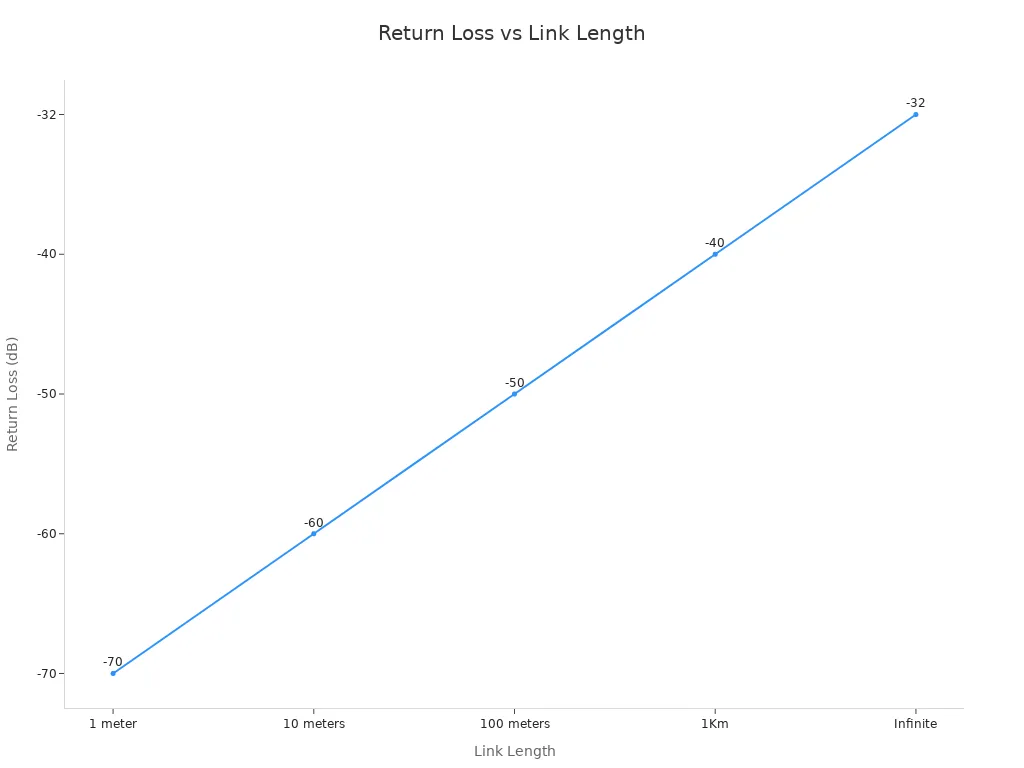
Back reflections can make lasers and transceivers get too hot. They can crack or not last as long. You might lose data or have weak signals in your network. These problems can happen in data centers and other places that need strong signals.
Tip: A fiber isolator from Kernstech helps stop these problems and keeps your system safe.
One-Way Light Path
A fiber isolator lets light go in only one direction. It blocks light that tries to go backward. The isolator uses the Faraday effect to turn the light’s polarization. Only light moving forward can pass through. If light bounces back, the isolator turns its polarization again and stops it from going to your source.
Here is how the one-way path works:
Light goes in and passes the first polarizer.
The Faraday rotator turns the light’s polarization by 45°.
The second polarizer lets the turned light pass.
Reflected light gets turned again and cannot pass the first polarizer.
This keeps your signal clean and protects your equipment. Your signal stays strong and you have fewer problems.
Specification | Importance |
|---|---|
Insertion Loss | Keeps your signal strong for communication systems. |
Isolation Ratio | Maintains one-way light flow for better protection. |
Wavelength Range | Ensures the isolator works well across the needed spectrum. |
Fiber Isolator and Signal Noise
Reducing Interference
You want your fiber optic signal to be clear and strong. A fiber isolator helps by cutting down noise and interference. In fiber optic systems, tiny sound waves called acoustic phonons can scatter light. This scattering makes extra frequencies that mess up your main signal. The fiber isolator is built to lower how much light hits the glass. This means you get less interference and a cleaner signal.
Fiber isolators help with different kinds of interference:
Signal reflection and backscattering: They stop light from going backward.
Signal interference and crosstalk: They keep each signal path apart, so signals do not mix.
Protection of sensitive components: They move unwanted light away from important parts.
Amplifier instability: They stop feedback loops in amplifiers and keep your system steady.
Cleaner Transmission
A fiber isolator gives you a cleaner signal by using low insertion loss and high isolation. Low insertion loss means your signal stays strong as it moves forward. High isolation stops reflected or scattered light, so your signal does not mix with noise.
Low insertion loss keeps your signal strong.
High isolation blocks unwanted light and noise.
You get a stable and clear signal every time.
Protects Components
Safeguarding Lasers
Lasers and detectors help your fiber optic system work well. A fiber isolator acts like a shield for these important parts. It lets light go forward but stops light that tries to bounce back. This keeps bad reflections away from your laser source. Using a fiber isolator helps your laser stay steady and avoids noise or sudden power changes. This matters in systems like:
Optical fiber communication systems
Optical fiber sensing systems
Fiber lasers
Without a fiber isolator, your laser can have problems. It might become unstable, get damaged by optical feedback, or even stop working. High-power lasers are at greater risk because unwanted light can get stronger and cause big damage.
Preventing Optical Damage
You want your equipment to last a long time. A fiber isolator protects your system by stopping reflected light from reaching important parts. This lowers the chance of overheating or cracking in lasers and detectors. It also helps your signal stay clear and steady.
Here is how different parts work together to protect your equipment:
Mechanism | Function |
|---|---|
Blocks light from going the wrong way and stops reflections. | |
Change light’s polarization to absorb or send back light. | |
Control light in one direction and make your system work better. | |
Applications | Used in fiber optics, spectroscopy, and measuring equipment. |
Using a fiber isolator helps your lasers and detectors last longer. You will need fewer repairs and spend less on maintenance. This means your network works better and does not stop as often.
A fiber isolator gives you three big protections. It blocks reflections, lowers noise, and keeps your equipment safe. Kernstech fiber isolators help your signal stay strong. They also protect your system from harm. Better isolation ratios and low insertion losses make your system work better for longer.
FAQ
What does a fiber isolator do in my network?
A fiber isolator lets light move one way. It helps keep your signal safe. Your equipment is also protected. Kernstech fiber isolators make your network steady.
How does Kernstech fiber isolator improve signal quality?
You get less noise and fewer reflections. Kernstech fiber isolators use low insertion loss. They also have high isolation. This gives you a cleaner signal.
Can I use Kernstech fiber isolators with any fiber optic cable?
Kernstech fiber isolators work with most standard fiber optic cables. Check your cable type and wavelength range for the best results.


