


Mini Hybrid Devices for High-Speed Optical-Electrical Integration
High Return Loss High Extinction Ratio
High Stability and Reliability
Applications:
Test Instrument
Fiber Sensors
Product Development
| Quantity: | |
|---|---|
| PDF Export | |


Product Description
Product Description
The Mini Hybrid Devices represent a critical advancement in optical-electrical integration, engineered specifically to address the growing demand for seamless photonic-electronic convergence in space-constrained environments. As modern systems require higher data throughput and more complex control mechanisms within shrinking form factors, these compact modules provide a highly reliable solution. By combining critical optical and electrical components into a single, unified package, they help engineers and system integrators overcome the traditional challenges of discrete component layout, signal integrity degradation, and thermal management.
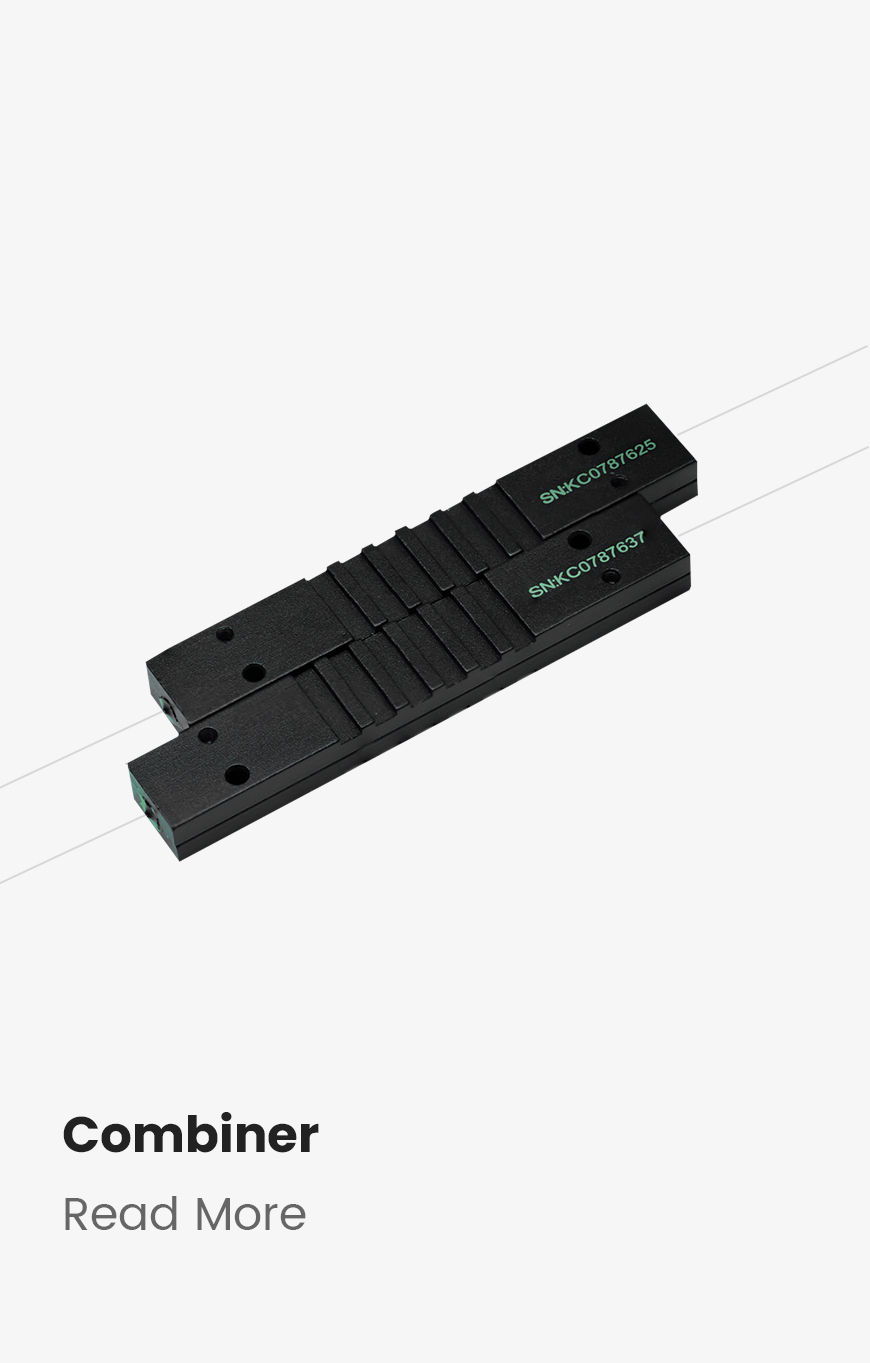
At the core of each device is a sophisticated architecture that integrates a high-speed optical transceiver—incorporating precision components such as a laser diode or photodetector—with low-power signal processing circuitry, which may include amplifiers, drivers, or controllers. This tightly coupled design significantly reduces parasitic capacitance and inductance, thereby enhancing high-speed signal fidelity and overall system efficiency. Designed for high-density integration, these modules are built to deliver consistent performance over long operational lifespans, lowering maintenance costs and minimizing the risk of system downtime in critical applications.
Key Features and Engineering Advantages
Ultra-Compact Form Factor: Engineered for maximum space efficiency, each module features ultra-small dimensions of ≤15mm x 10mm x 5mm. This miniature footprint allows for high-density board layouts, enabling equipment manufacturers to design smaller, lighter, and more capable end-products without sacrificing functionality.
Hermetically Sealed Reliability: To ensure long-term stability in demanding environments, all critical optical and electronic components are housed in a hermetically sealed package. This robust construction protects sensitive internal elements from moisture, dust, and environmental contaminants, ensuring dependable operation across varying temperature ranges and industrial conditions.
Advanced Signal Processing Capabilities: The integrated circuitry is designed to support both analog and digital signal processing. This versatility makes the modules highly adaptable to a wide range of system architectures, simplifying the design process for engineers working on mixed-signal applications.
Optimized Power Efficiency: By co-packaging the optical transceiver with low-power processing components like amplifiers and drivers, the devices minimize power consumption and thermal dissipation. This is particularly valuable for densely packed systems where thermal management is a critical design constraint.
Target Applications and Implementation Value
The Mini Hybrid Devices are developed to meet the rigorous demands of advanced technology sectors, providing a reliable foundation for equipment manufacturers and procurement teams seeking to enhance system capabilities while reducing overall assembly complexity.
Next-Generation Communication Networks: In high-speed data transmission systems and optical network equipment, these devices facilitate efficient signal conversion and routing. Their compact size and integrated drivers support the development of higher-capacity switches, routers, and access network hardware.
Advanced Sensing Systems: For industrial and environmental sensing applications, the integrated photodetectors and low-noise amplifiers ensure accurate signal acquisition and processing. The hermetic sealing guarantees consistent sensor performance even in harsh field conditions.
Industrial Automation and Control: In automated manufacturing and robotics, reliable data exchange and precise control are essential. These hybrid modules provide the necessary optical-electrical interface for robust communication links between sensors, controllers, and actuators, immune to the electromagnetic interference (EMI) often found in industrial settings.
By selecting these integrated modules, procurement professionals and design engineers can significantly streamline their supply chain, reduce the number of discrete components required, and accelerate the time-to-market for new equipment designs. The combination of miniature size, comprehensive signal support, and rugged packaging makes them a strategic choice for upgrading existing infrastructure or developing innovative new platforms.
Download
 (49)Mini Size PM Isolator.pdf
  (50)Mini Size Online Polarizer.pdf
  (51)Mini Size Beam Splitter-Combiner.pdf (52)Mini Size PM Filter Coupler.pdf (53)Mini Size PM WDM.pdf (54)Mini Size PM DWDM.pdf (55)Mini Size PM CWDM.pdf (56)Mini Size PM Tap+Isolator.pdf (57)Mini Size PM Isolator + WDM 2-in-1 Hybrid Device.pdf (58)Mini Size PM Isolator + Filter 2-in-1 Hybrid Device.pdf (59)Mini Size PM Coupler + WDM 2-in-1 Hybrid Device.pdf (60)Mini Size PM Isolator + Tap + WDM 3-in-1 Hybrid Device.pdf

