

How Do You Qualify Pump Combiner Suppliers?
Views: 0 Author: Site Editor Publish Time: 2026-10-22 Origin: Site


Introduction
Fiber optic technology continues to evolve at a blistering pace. We are constantly pushing the boundaries of what optical networks and industrial lasers can achieve. High-power fiber lasers and optical amplifiers operate under extreme environmental and thermal conditions. At the core of these advanced systems lies a critical, yet highly fragile component: the pump combiner. This device merges multiple pump laser outputs into a single active fiber. Consequently, a single microscopic failure here will lead to catastrophic system damage.
Current industry trends reveal a massive, undeniable shift toward multi-kilowatt industrial cutting lasers and the aggressive rollout of next-generation coherent optical communication networks. For instance, the surging demand for LiDAR and ultra-dense sensing architectures requires unprecedented optical stability. This rapid expansion pushes component tolerances to their absolute physical limits. We are no longer just passing light; we are managing intense optical power densities. Therefore, the demand for high-quality, ultra-reliable optical components has surged globally.
Choosing the right manufacturing partner is no longer about hunting for the lowest price on a specification sheet. A transactional mindset fails in high-power optics. Today, securing a vendor requires a deep, empirical assessment of long-term reliability, technical capability, and supply chain resilience. Here is the exact engineering criteria and business evaluation framework required to successfully qualify a supplier for your most demanding optical architectures.
Key Takeaways
- Technical Expertise is Non-Negotiable: A qualified supplier must demonstrate absolute mastery over critical performance metrics. Signal insertion loss, power handling, and thermal management are fundamental indicators of true manufacturing competence.
- Specialized Capabilities Matter: Advanced applications frequently require maintaining strict polarization states. Your supplier must have a proven track record with specialized components and related passive devices.
- Rigorous Testing Ensures Reliability: Look for manufacturing partners that adhere to strict industry standards, such as Telcordia GR-1209-CORE. They must offer comprehensive batch-to-batch testing data.
- Customization is Key: The most effective suppliers act as true engineering partners. They should offer custom port configurations tailored to your specific amplifier or fiber laser architecture.
- Supply Chain Stability: Evaluating a supplier's raw manufacturing capacity, transparent lead times, and established quality certifications is just as vital as evaluating their physical products.
Understanding the Critical Role of a Pump Combiner
Overview of the Component
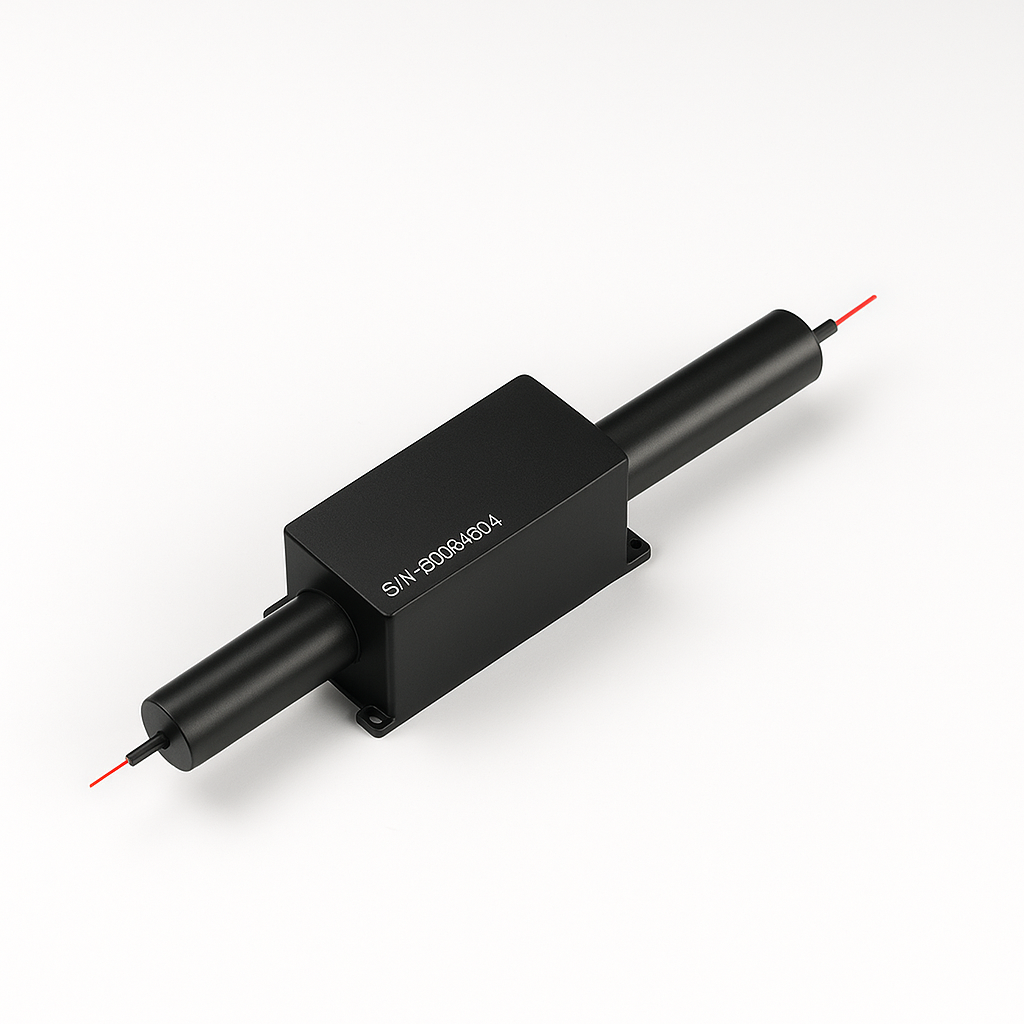
In high-power fiber lasers and Erbium-Doped Fiber Amplifiers, commonly known as EDFAs, the pump combiner acts as the central hub of the optical architecture. Its primary function is to efficiently merge raw optical energy from several lower-power laser diodes. It then funnels this combined energy into a single double-clad active fiber. Because all the system's power converges at this single microscopic junction, the combiner is fundamentally the heart of the optical amplifier. It provides the necessary energy for signal amplification or laser emission.
Impact on System Performance
The manufacturing precision of this component directly dictates the performance ceiling of your entire system. A well-engineered combiner ensures high coupling efficiency. This means the maximum amount of pump light successfully transfers into the active fiber core. This seamless transfer directly enhances the final output power and preserves the overall beam quality. Furthermore, a highly stable component maintains long-term signal integrity. It ensures that the amplified light remains clean and completely free from unwanted optical noise.
The Cost of Poor Quality
Choosing an unqualified vendor introduces severe operational hazards. Poorly manufactured combiners frequently suffer from slight misalignments or microscopic defects in the fused region. Consider the operational reality on the factory floor. In a 5kW laser system, even a 1 percent optical leakage means 50 watts of energy is escaping directly into the component's housing. This leaked light rapidly converts into intense localized heat. It will melt the fiber coating, trigger thermal runaway, and cause catastrophic back-reflection that destroys expensive upstream pump diodes. Ultimately, the resulting system downtime and hardware replacement costs will far outweigh any initial savings from a cheaper component.
Essential Technical Capabilities to Evaluate
High Power Handling and Thermal Management
Modern fiber laser systems generate immense thermal loads. Therefore, heat dissipation is a primary indicator of a supplier's technical maturity. When auditing a potential partner, you must rigorously evaluate their packaging and heat-sinking technologies. Qualified manufacturers utilize advanced thermal potting compounds and precision-machined metallic housings. These materials aggressively draw heat away from the fragile fused fiber region. Do not just take their word for it. Ask potential vendors for thermal imaging data and long-term endurance heat dissipation models. You must verify their components will remain stable under continuous high-power operation, often handling 50W to 100W per port without degradation.
Low Insertion Loss and High Coupling Efficiency
Signal loss is the ultimate enemy of optical efficiency. Every decibel of insertion loss translates to wasted pump power. This forces the system to draw more electrical current to achieve the desired output. Beyond lowering wall-plug efficiency, this wasted energy drastically increases thermal stress. Evaluate the supplier's mastery of Fused Biconical Taper technology. Suppliers utilizing advanced, automated tapering stations can achieve highly consistent fusing of the fibers. This precision ensures maximum transmission rates and prevents optical leakage. A top-tier component should consistently demonstrate a signal insertion loss of less than 0.5 dB to 0.7 dB.
Expertise in Polarization Maintaining Optics
Many advanced optical networks rely on polarized light to function correctly. In environments like fiber optic gyroscopes and coherent communication systems, standard components are completely insufficient. You must verify the supplier's expertise in manufacturing a Polarization Maintaining Pump Combiner. These specialized devices are constructed using highly specific polarization-maintaining fibers, such as PANDA or Bow-Tie fibers, which possess high birefringence. When evaluating a supplier, scrutinize their Polarization Extinction Ratio. A high ratio, typically exceeding 20 dB, indicates precise alignment of the stress-applying parts within the fiber during the fusing process. Suppliers lacking strict alignment protocols will consistently fail to meet these acceptable benchmarks.
Core Engineering Selection Criteria
To bridge the gap between theoretical specifications and real-world procurement, use the following baseline parameters when qualifying a supplier's technical data sheets.
| Parameter | Standard Combiner Minimum Spec | PM Combiner Minimum Spec |
|---|---|---|
| Pump Efficiency | > 90% | > 90% |
| Signal Insertion Loss | < 0.5 dB | < 0.7 dB |
| Polarization Extinction Ratio | N/A | > 20 dB |
| Optical Return Loss | > 45 dB | > 45 dB |
Evaluating the Supplier's Product Ecosystem
Integration with Passive Optical Devices
Optical system engineers rarely purchase just one isolated component for a complex build. A robust, capable supplier should offer a cohesive ecosystem of passive components. This includes high-precision devices like a PM fiber optic coupler. Sourcing both combiners and couplers from a single supplier offers profound engineering and logistical advantages. Optically, it ensures seamless compatibility. The supplier can utilize the exact same batch of raw fiber for both components, effectively eliminating splice losses caused by mismatched mode field diameters. From a procurement standpoint, a unified vendor simplifies supply chain management and ensures uniform quality control standards.
Range of Port Configurations
A supplier's technical depth is frequently reflected in the diversity of their product catalog. Standard setups like 2x1 and 3x1 ports are common. However, advanced system architectures often demand complex configurations. Evaluate whether the supplier can reliably produce intricate setups such as 3x3, 6x1, or custom multi-port feedthrough designs. Fabricating a 2+1x1 combiner with high signal transmission and minimal pump-to-signal cross-talk requires highly sophisticated fiber bundling and tapering capabilities. A diverse catalog demonstrates the engineering maturity necessary to support your future product development cycles.
Quality Assurance and Testing Protocols
Adherence to Industry Standards
Reliability in telecommunications and industrial optics is never an accident. It is governed by strict industry standards. A qualified supplier should design and test their components in accordance with established reliability assurance frameworks. Specifically, they must follow Telcordia GR-1209-CORE, which dictates generic requirements for passive optical components, and GR-1221-CORE for reliability assurance. Compliance with these rigorous standards indicates that the components are engineered to survive harsh environmental conditions and operate continuously for decades.
In-House Testing Capabilities
A manufacturing partner is only as good as their testing laboratory. Relying on third-party testing for batch qualification introduces unacceptable delays and reduces direct quality oversight. Audit their facility for robust in-house testing capabilities. They must perform extensive thermal cycling to evaluate resistance to rapid temperature changes. They must also conduct damp heat testing to assess adhesive reliability under moisture. Most importantly, they must conduct high-power endurance testing. Running components at maximum rated power for over 100 hours is the only way to truly verify thermal stability.
Traceability and Batch Consistency
In volume manufacturing, consistency is paramount. Buyers must demand detailed test reports for every single batch to ensure performance remains stable across large production runs. A top-tier supplier utilizes automated tracking systems to maintain strict traceability protocols. Every individual component should be laser-engraved with a unique serial number. This number must directly link to a specific test data sheet detailing its exact insertion loss, polarization ratio, and optical return loss. If a vendor cannot provide serialized test data, it is a severe indicator of inadequate quality control.
Customization and Engineering Support
Co-Design and Prototyping Services
For hardware engineers, off-the-shelf components frequently fall short of highly specific system requirements. Specialized amplifier architectures or unique pump laser wavelengths require custom-tailored solutions. Look for suppliers who actively offer co-design and prototyping services. A qualified manufacturing partner will collaborate with your team when customizing a Pump Combiner. They will adjust fiber pigtail lengths, target specific operating wavelengths, or design specialized port configurations. Furthermore, evaluate their turnaround time. An agile supplier can typically deliver functional optical prototypes within a few weeks, drastically accelerating your time-to-market.
Responsive Technical Support
Integrating passive optical components into high-power systems inevitably involves complex troubleshooting. When issues arise regarding splice compatibility, thermal mounting, or polarization alignment, you need immediate, data-driven answers. Assess the supplier's technical support structure early in the qualification phase. It is vital to have direct communication access to experienced optical engineers rather than being filtered exclusively through sales representatives. A supplier that facilitates engineer-to-engineer dialogue demonstrates a genuine commitment to your system's success.
Manufacturing Capacity and Supply Chain Reliability
Scalability for Volume Production
A vendor might produce a flawless prototype batch, but transitioning to volume manufacturing introduces entirely different challenges. You must assess whether the supplier can scale their operations to deliver a large production run without experiencing a drop in yield rates or component quality. Investigate their manufacturing infrastructure. Suppliers utilizing semi-automated workstations and automated alignment stages generally exhibit higher scalability and tighter batch-to-batch consistency than those relying entirely on manual fabrication.
Lead Times and Inventory Management
Recent global photonics supply chain bottlenecks have highlighted the extreme danger of relying on just-in-time inventory models. Transparent, predictable lead times are essential for your production planning. During the qualification process, discuss the supplier's inventory management strategies. Do they hold safety stock for critical raw materials, such as specialized fibers and optical adhesives? Do they maintain buffer inventory for standard components? A supplier with proactive supply chain management is significantly less likely to hit you with sudden, crippling delays.
Certifications and Red Flags to Avoid
Necessary Facility Certifications
Baseline facility certifications provide an objective measure of a supplier's operational discipline. At a minimum, the manufacturing facility must hold an ISO 9001 certification. This ensures they have a documented, auditable Quality Management System in place. Additionally, RoHS compliance is mandatory for components integrated into global markets. If the supplier manufactures components for specialized sectors like aerospace or medical devices, additional stringent certifications may be required.
Common Red Flags in Supplier Qualification
When auditing potential partners, remain highly vigilant for warning signs that indicate underlying operational flaws. Unusually low pricing is a major red flag. It often points to the use of substandard raw optical fiber, cheap adhesives, or skipped testing phases. A refusal to share detailed batch test data suggests inconsistent manufacturing yields. Specifically, optical fusing requires strict contamination control. A lack of certified cleanrooms guarantees microscopic particulate contamination, which will inevitably lead to component failure under high power. Finally, evasive communication during the sales process guarantees that post-purchase technical support will be nonexistent.
Conclusion
Qualifying a supplier requires a methodical and holistic evaluation. You must look far beyond basic specification sheets. Rigorously check their technical mastery, especially regarding specialized polarization-maintaining components, and their adherence to strict testing protocols. Equally important is assessing their business stability, manufacturing scalability, and supply chain resilience in an increasingly volatile global market.
Treating your supplier as a long-term engineering partner yields the best results for high-performance optical systems. Collaborative relationships foster better custom designs, faster troubleshooting, and more reliable production schedules.
Do not leave your optical architecture to chance. Use the rigorous criteria outlined in this guide to audit your current suppliers today. Whether you need standard configurations or specialized pump combiner accessories, reach out to Kernstech for a technical consultation. Explore our comprehensive product catalog at kernstech.com to secure reliable, high-performance components for your next optical build.
FAQ
What is the difference between a standard pump combiner and a Polarization Maintaining version?
While both devices serve the fundamental purpose of merging multiple light sources into a single fiber, their internal construction and end applications differ significantly. A standard combiner does not control or preserve the polarization state of the light passing through it. In contrast, the PM version is built using specialized polarization-maintaining fibers, such as PANDA or Bow-Tie fiber. These fibers contain internal stress-applying parts that create birefringence. This effectively locks the linear polarization state of the input light in place. This preservation is absolutely critical for specific interferometric applications, coherent communication systems, and advanced optical sensors where polarization fluctuations would severely degrade the signal.
What is the acceptable signal insertion loss for a high-quality component?
For standard high-power applications, a premium supplier should deliver a signal insertion loss of less than 0.5 dB. For more complex polarization-maintaining versions, the acceptable threshold is typically slightly higher due to the internal fiber structure, but it should still remain strictly under 0.7 dB. Any loss greater than this indicates poor fusing techniques and will result in excessive thermal buildup during operation.
How does thermal management affect long-term reliability?
Thermal management is the most critical factor in preventing catastrophic failure. When optical energy leaks during the combining process, it converts directly into heat. If the component's housing and internal potting compounds cannot dissipate this heat efficiently, the internal adhesives will degrade, and the fiber coating will melt. This triggers thermal runaway, which destroys the component and can cause severe back-reflection damage to your expensive pump laser diodes.
How do I test the quality of a sample in the lab?
Testing a sample requires a methodical approach in a controlled optical laboratory. First, measure the insertion loss using a stable, low-power laser source and an optical power meter to ensure maximum transmission efficiency. Second, if you are evaluating a PM component, test the Polarization Extinction Ratio using a polarized light source and a polarimeter to verify polarization stability. Third, run the component at its maximum rated power for an extended period to test thermal stability. Continuously monitor the housing temperature using an infrared thermal camera. Finally, check for back-reflection to ensure the component will not send stray light backward.
Can a supplier customize a component for my specific amplifier setup?
Yes, reputable optical manufacturers offer extensive customization services to meet unique engineering challenges. Because amplifier architectures vary wildly based on specific gain requirements and spatial constraints, a standard off-the-shelf component may not suffice. A qualified supplier can customize various parameters. This includes specific input and output fiber types, custom port configurations, targeted operating wavelengths, and specialized high-power handling capacities. They can also modify the physical packaging dimensions to fit seamlessly within highly compact modules.
Why is it important for my supplier to also manufacture fiber optic couplers?
Sourcing both components from the exact same manufacturer provides profound technical and logistical advantages. From a technical standpoint, it ensures seamless optical compatibility across your system. The manufacturer will utilize the same raw fiber batches, splicing techniques, and quality tolerances for both devices. This drastically minimizes mismatch losses in your optical circuit. Logistically, purchasing from a single, unified source reduces supply chain complexity, lowers administrative overhead, and guarantees a uniform standard of quality across the most critical passive components in your architecture.


